

Strengthening Somalia’s Healthcare Sector Decentralization in a Federal System
posted 1st December 2025
Strengthening Somalia’s Healthcare Sector Decentralization in a Federal System
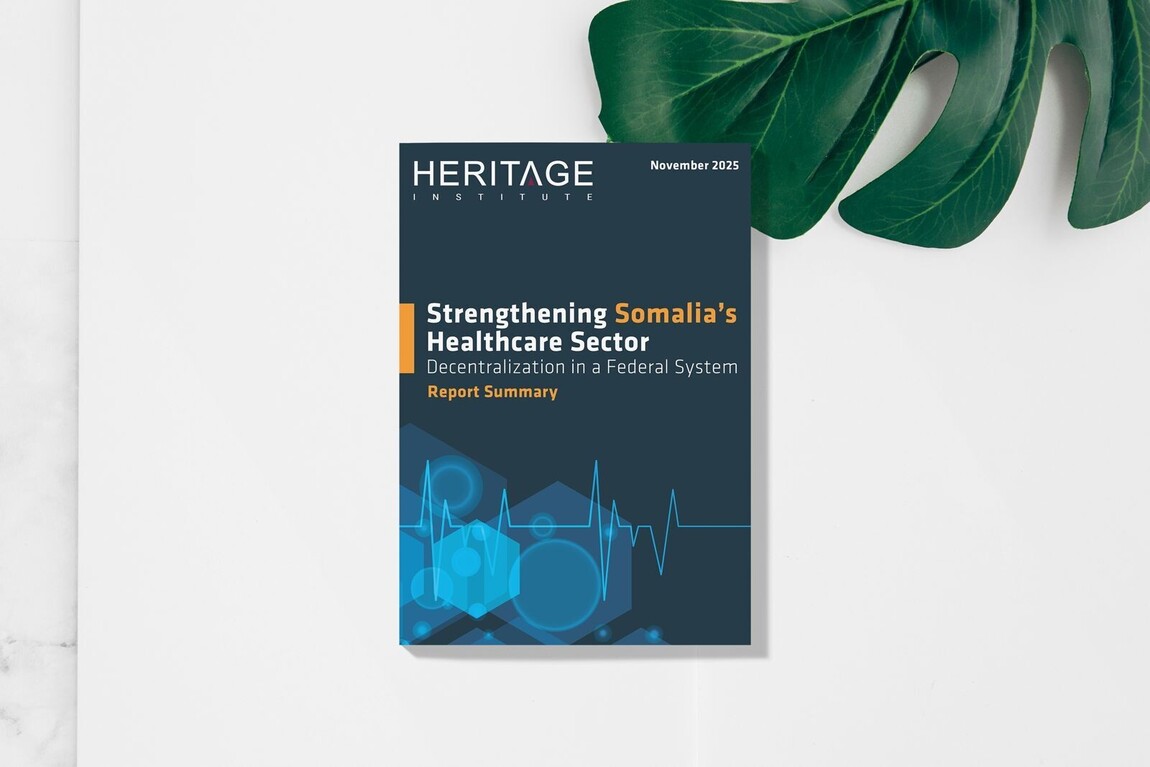
In September 2024, the Heritage Institute for Policy Studies (HIPS) funded a comprehensive study to assess structural and capacity challenges within Somalia’s federal and state ministries of health. The study aimed to inform the development of a resilient, innovative, and sustainable decentralized healthcare system aligned with Somalia’s federal governance framework. It identified major weaknesses in policy formulation and limited use of evidence in decision-making, as well as overlapping and unclear mandates between federal and state entities that undermine coordination and accountability. Health planning was found to be largely donor-driven and poorly integrated across levels of government, reducing strategic coherence. In response, the study proposes a set of targeted recommendations. These include strengthening the Federal Ministry of Health’s (MOH) planning capacity, policy development, and regulatory oversight through structured engagement with research institutions and international partners; empowering state and district-level authorities to serve as the operational core of decentralized service delivery, with tailored support for planning and resource allocation; diversifying revenue streams through selective health-related taxes (such as on tobacco, khat, and sugary drinks) and licensing of private health actors; and clearly defining federal and local planning responsibilities to better align budgeting with service delivery. Overall, the study offers a strategic roadmap for policymakers to advance health sector decentralization in Somalia. By addressing structural gaps, enhancing institutional capacity, and promoting inclusive governance, Somalia can build a health system that is more equitable, responsive, and consistent with its federal aspirations.